







Search Results for: Flat White Preparation

What's the difference between Starbucks Flat White and Australian White Coffee? A breakdown of Flat White's per-cup price and key preparation points
In the large family of espresso drinks, latte, mocha, and cappuccino are already well known, while Flat White and the Starbucks menu's "馥芮白" often leave people confused. In fact, "馥芮白" and Australian white coffee both refer to the same drink; only the name and preparation vary by region. Starting from the production standards of Front Street Coffee, this article sorts out the controversy over the origin of Flat White, the choice of espresso base, milk steaming temperature and foam thickness, and compares it with latte in terms of cup size, ratio, and flavor, to help coffee lovers make a qualified Flat White at home. [more…]

How Is Australian White Coffee Different from Flat White? A Detailed Explanation of Flat White's Milliliters, Preparation, and Differences from Latte and Cappuccino
When visiting a café and ordering a milk coffee, most people first think of a latte or cappuccino, but at Luckin Coffee and Starbucks, you'll also see names like "Furui White" and "Aorui White." They all actually refer to Australian-style white coffee, namely Flat White. This article sorts out the controversy over the origin of flat white, its differences from latte and cappuccino in cup size, milk volume, and milk foam thickness, and provides Front Street Coffee's flat white preparation method, including the extraction parameters for a double espresso, key points for steaming milk, and latte art techniques. It also introduces the flavor sources and suitable scenarios for Front Street Coffee's Sunflower Warm Sun blend coffee beans. [more…]

What exactly is the difference between Starbucks Flat White and Aussie Flat White? A comprehensive analysis from origin to preparation
On the menus of major coffee shops, Americano, Latte, and Flat White (or Fu Rui Bai) have long become familiar choices. Especially after Starbucks launched the Fu Rui Bai in 2020, this beverage quickly captured the hearts of many coffee enthusiasts. So, what kind of coffee is Fu Rui Bai exactly? Is there a difference between it and the Australian Flat White? This article will break down this classic milk coffee that sits between a latte and a cappuccino from multiple angles, including conceptual definitions, historical origins, and preparation methods, and share the specific parameters and blend choices used by Front Street Coffee when making Fu Rui Bai in-store. [more…]

How Is Australian White Coffee Different from Fu Rui Bai and Ao Rui Bai? The Origin Controversy and Key Preparation Points of the Flat White Explained
Many coffee lovers are in the habit of ordering a latte at a café, and in recent years more and more people are choosing a flat white. The flat white is also known as Australian white coffee, and some call it fu rui bai or ao rui bai. Whether this coffee originated in Australia or New Zealand remains disputed to this day. The two countries not only each insist on their own claim to its origin, but also have different preferences when it comes to preparation standards—Australia tends toward a single shot of espresso, while New Zealand often uses a double ristretto. This article reviews the historical written records of the flat white, its differences from the latte and cappuccino, and shares the specific method Front Street Coffee uses to produce a flat white in-store, including cup size selection, milk frothing techniques, and coffee bean blending options. [more…]

The Complete Guide to Flat White Coffee: Origins, Preparation, and Differences from Fu Rui Bai
Flat White, Aussie White, Alto White, Little White—these seemingly different names all actually point to the same classic milk coffee originating from the Southern Hemisphere: Flat White. With a stronger coffee flavor than a latte and a finer milk foam texture than a cappuccino, it quickly became popular in the global specialty coffee scene. So how exactly was the Flat White born? Is it really the same drink as Alto White? And how can you make a standard Flat White at home or in a café? This article, from the perspective of Front Street Coffee, systematically sorts out the definition, historical context, recipe ratios, and key production points of Flat White, and answers common questions about its relationship with Alto White, helping you understand this world-famous milk coffee all at once. [more…]

An Analysis of the Flavor and Mouthfeel Characteristics of Flat White: Core Differences from Latte and Key Preparation Points
Flat White and latte are both popular espresso-based milk coffees, but they differ clearly in milk foam thickness, milk ratio, and overall mouthfeel. Flat White uses a double ristretto as its base, with milk foam as thin as 0.3–0.5 cm, pursuing a rich, smooth, coffee-forward flavor. This article sorts out Flat White's origin background, preparation method, and comparison with latte and cappuccino, and also includes Front Street store brewing parameters and recommendations for five espresso blend beans, as a reference for coffee lovers to replicate at home. [more…]

Does latte art affect the flavor of a flat white? An analysis of thin milk foam steaming techniques and key preparation points
Many coffee enthusiasts notice that some coffee shops serve flat white without latte art, which raises questions: should flat white have latte art? Does the absence of latte art affect the taste of the coffee? In fact, latte art appeared much later than the birth of classic milk coffees like latte and cappuccino, and whether latte art is present or not does not directly change the flavor of the coffee. What truly affects the taste are the ingredients, espresso extraction, milk frothing, and the degree of integration. Through comparative experiments, Front Street Coffee found that flat whites with and without latte art show no difference in mouthfeel or taste. The milk foam of a flat white is extremely thin, less than 0.5 cm in thickness, and highly fluid, making latte art quite difficult—though not impossible. This article will analyze the necessity of latte art on flat white and the key points for frothing thin milk foam, from the perspectives of experimentation and preparation. [more…]

Analysis of Flat White Coffee Milk Ratio and Bitterness: A Tutorial on Aurelio White Preparation Steps and Parameter Adjustment
Flat White, also known as Australian White or Fu Rui Bai, originated in Melbourne, Australia, and is renowned for its thin milk foam and rich coffee flavor. Like a latte or cappuccino, it consists of espresso and fresh milk, but it highlights the aroma of the coffee itself more, with the milk foam being only about 0.5 cm thick and level with the rim of the cup. This article provides a detailed analysis of the Flat White's origin controversy, milk foam thickness, Ristretto base extraction parameters, and milk ratio, and uses a 200 ml ceramic cup as an example to demonstrate the complete preparation process at Front Street Coffee stores, from grinding 20 grams of coffee and extracting 28–30 grams of Ristretto to adding 170 grams of hot milk, helping coffee enthusiasts master the core points of this beverage. [more…]
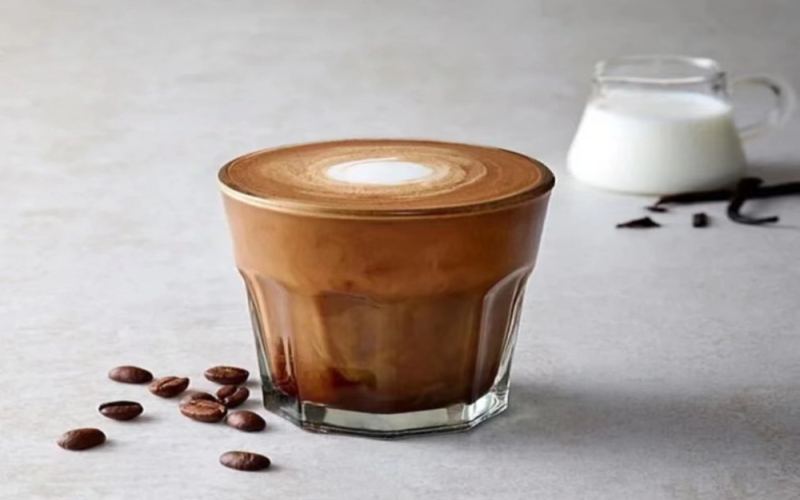
Luckin Aussie White and Milk Ratio Analysis: Aussie White Taste Characteristics and Preparation Process Sharing
Flat White coffee was born in the 1980s and 1990s. Regarding its origin, Australia and New Zealand each insist on their own version, and the debate remains unsettled to this day. This drink is known for its rich coffee flavor and delicate, thin milk foam, and it differs noticeably from a latte and a cappuccino in cup size, coffee base, and foam thickness. After Starbucks introduced it to China, it was named “Fu Rui Bai,” while other brands continued to use the name “Flat White.” This article will discuss the historical controversy surrounding Flat White, its flavor characteristics, its specific differences from a latte, and the steps for making Luckin’s Australian-style Flat White, helping coffee lovers gain a comprehensive understanding of this rich milk coffee. [more…]

Flat White Coffee | What Is a Flat White? Flat White Coffee Preparation Parameters and Espresso-to-Milk Ratio Reference
Espresso-based coffee is probably the most universally popular series of coffee drinks. You might not like black coffee that hits your palate with either sourness or a burnt bitterness, but espresso drinks can be adjusted in their ratios to offer you different tastes and flavor experiences. Among these, adjusting the ratio of espresso to milk is likely the most basic technique in espresso drinks. [more…]

How Does Malaysian White Coffee Differ from Black Coffee? A Full Analysis of White Coffee's Flavor, Preparation, and Its Connection to Flat White
What exactly is the difference between Malaysian white coffee and black coffee? Is white coffee really healthier and tastier? This article starts with the origins, roasting methods, and flavor characteristics of white coffee, sorts out how it differs from Malaysian black coffee, and extends to the Aussie white (flat white) that is often called "white coffee" today. You will also see how Starbucks makes its flat white, the differences between the iced and hot versions, and the parameters and steps for making a flat white at home using Front Street Coffee's classic espresso blend beans, along with a comparison of the differences between a flat white and a latte in milk foam thickness, cup size, and espresso base. [more…]

Starbucks Flat White, Costa Flat White, and Luckin Aussie White: A Full Analysis of the Origins, Preparation, and Differences of the Flat White Milk Coffee
The Flat White that Starbucks made popular is actually the "Flat White" on English menus, also commonly known as Australian white coffee. How exactly does it differ from a latte or a cappuccino? This article starts with the controversy over its name, its origin story, the choice of espresso base, and the ratio of milk foam to coffee, clarifying the Australian and New Zealand schools of preparation, and comparing the same drink behind chain-brand names such as Flat White, Artisan White, and Australian White. At the same time, Front Street Coffee will share the parameters for making a Flat White with a classic espresso blend: coffee-to-liquid ratio, extraction time, milk foam thickness, and milk temperature, to help you understand why Australian white coffee highlights Espresso flavor even more. [more…]

Flat White | What Is Australian White Coffee? Differences Between Flat White and Latte in Dirty Preparation, Ratio, Taste, and Characteristics
For more specialty coffee knowledge, please follow: Front Street Coffee (FrontStreet Coffee). Nowadays, although more and more coffee varieties are appearing on café menus, milk-based coffee products are still the most popular. According to the results of multiple surveys, the latte has always been the coffee [more…]

An Introduction to Italian Milk Coffee | What Are the Differences in Flavor, Taste, and Preparation Among Latte, Cappuccino, and Flat White? How to Quickly Identify Types of Milk Coffee?
Latte, cappuccino, and flat white are almost always on the menu at coffee shops as the staple milk coffee categories. This article will help you clearly distinguish the differences between these three milk coffees. Since most people have more or less encountered these three milk coffees, here is a brief introduction to their origins. Modern latte and cappuccino [more…]

A comprehensive analysis of lattes, cappuccinos, and flat whites: extraction parameters, milk ratios, and milk foam thickness comparison
Latte, cappuccino, and flat white are the three most common espresso-based milk coffees on café menus. They are all made from a combination of espresso and milk, yet each has its own particularities in terms of extraction volume, milk ratio, and foam thickness. This article will examine the origins and preparation differences of these three drinks one by one, and compare in detail the extraction standards for espresso, the proportions of milk used, and the texture requirements for milk foam. The article also introduces the blend recipes and serving parameters that Front Street Coffee uses for different milk coffees, helping coffee enthusiasts not only understand the basics but also grasp the key points in actual preparation. [more…]

Starbucks Flat White Preparation Method Explained: What Is the Connection Between Flat White and Furuibai?
A flat white is a drink with less milk and more coffee, typically made with a double espresso paired with fine microfoam, placing it somewhere between a latte and a cappuccino. It originated during World War II, when Italian immigrants brought espresso culture to Australia and New Zealand, and the two countries still argue over who invented it first. In 2015, Starbucks launched the flat white in the United States, and in the same year it entered mainland China, where it was translated as "馥芮白". This article explains in detail how it differs from a latte and a cappuccino, and shares Front Street Coffee's flat white recipe, including bean blend selection, extraction parameters, and milk frothing techniques. [more…]

What Are the Differences Between a Latte, Cappuccino, and Flat White? A Comprehensive Analysis from Ratios and Milk Foam Thickness to Extraction Methods
Although all made from espresso and milk, lattes, cappuccinos, and flat whites each have their own distinct character and loyal following. These three milk coffees often appear side by side on café menus, and their preparation processes may seem similar, but in reality there are significant differences in espresso extraction volume, milk ratio, and foam thickness. This article will start with their historical origins, break down the key preparation points and flavor characteristics of each one by one, and use Front Street Coffee's classic Italian blend as an example to share how to recreate café-quality results at home. Whether you are a coffee enthusiast who is just starting out or a player hoping to refine your skills, you will find practical references here. [more…]

The naming origins of Piccolo coffee, its preparation ratios, and an analysis of its taste differences compared to Flat White, Latte, and Cappuccino
Italian coffee variations are constantly being reinvented, and while lattes and cappuccinos have long been deeply ingrained in people's minds, the niche drink known as Piccolo coffee is rarely mentioned. In Italian, Piccolo means "small," and Latte refers to milk; after being introduced into English, it derived the translated name "Piccolo." It uses 15 to 20 milliliters of espresso paired with steamed milk, served in a glass cup of about 100 milliliters, with the core aim of making the coffee flavor more prominent and the mouthfeel smoother. From the perspective of Front Street, this article explains in detail the preparation parameters and coffee bean selection for Piccolo Latte, and compares it with Flat White, Latte, and Cappuccino in terms of concentration and milk foam texture, helping coffee enthusiasts find the cup that suits their taste. [more…]

Exploring the Origins of Flat White Coffee: How to Pronounce "Flat White" in English, the Feasibility of Iced Versions, and the Essential Differences from a Latte
The Flat White is an extremely popular drink in Starbucks' milk coffee lineup. Its Chinese name is a transliteration of the English term, and it is also widely known as Australian White coffee. It combines the silkiness of a latte with the richness of a cappuccino, and highlights the coffee's original flavor more than a latte does. Around this coffee, there has long been a dispute over its place of origin between Australia and New Zealand. Starbucks officially traces it back to Australia in the 1980s, while New Zealand insists that Wellington is where it is perfectly presented. In addition to the topic of origin, this article will also analyze Starbucks' preparation parameters, whether an authentic Flat White is suitable for iced drinking, the coffee beans and extraction methods needed for home preparation, and will compare in detail its differences from a latte in cup size, milk foam thickness, and flavor focus. [more…]

What is the difference between a flat white and a fu rui bai? Is an iced Flat White feasible? Origin controversy and preparation explained in detail
When you walk into a café to order, do you get confused by names like Australian White, Flat White, and Artisan White? They actually all refer to the same Italian milk coffee—Flat White—just called differently by various brands. Whether this drink originated in Australia or New Zealand is still debated, but the domestic coffee scene prefers to call it Australian White. It differs noticeably from a latte in espresso extraction, milk foam thickness, and cup size. Traditionally, it is only served hot, but now iced versions have appeared to cater to the market. This article, based on Front Street Coffee's production parameters, will break down the origins and recipe logic of Australian White, as well as the key differences between espresso and ristretto, helping you find the cup that suits your taste better. [more…]